
Hutto City Directory Holdings
Hutto research begins with an important limit: no exact local city-directory publisher or year run was verified in the inspected Hutto Library and Texas State Library sources. That is not the same as proof that a volume never existed. It means the first task is to ask a reference desk or archive for a shelf, microfilm, vertical-file, or catalog confirmation before assigning a year to Hutto. The confirmed sources below are useful because each supplies either a local place record, a regional genealogy lead, or a clearly labeled reading example.
| Source set | Verified scope | Where to start | Access |
|---|---|---|---|
| Hutto local directory run | No year run verified | Hutto Public Library catalog and reference desk | Ask about uncataloged files, yearbooks, microfilm, and newspapers |
| Tri-Cities & La Porte directory | 1940–41 and 1942 examples | UNT Portal to Texas History | Online reading example only, not Hutto coverage |
| Hutto Sanborn map | 1921 sheet directly inspected | UNT Portal and Briscoe Center | Online map for street and building context |
| Williamson genealogy collection | The Chisholm Trail issues visible for 2011–2024 | WCGS and Round Rock Public Library | Regional research help and collection confirmation |
Hutto’s historic sources should therefore be treated as a confirmation problem, not a fill-in-the-blanks list. TSLAC, the UNT Portal, the Briscoe Center, Baylor’s Williamson County depository material, and nearby library collections are valid escalation channels. A directory for another city can teach its format, but it cannot establish that a person lived in Hutto.
Hutto Directory Leads at the Library
The Hutto Public Library catalog is the local starting point. The branch is listed at 500 W Live Oak Street and 512-759-4008, with Monday hours of 10–6, Tuesday through Thursday 10–7, Friday and Saturday 10–5, and Sunday closed. Its public genealogy links are useful routes, yet they do not publish a verified shelf list for Hutto telephone books, reverse directories, obituaries, or funeral-home files. Ask the reference desk whether donated local files, school yearbooks, newspaper microfilm, or vertical files are available before relying on a search result.
For a wider Hutto search, Round Rock Public Library’s research collection describes a joint Williamson County Genealogical Society collection, local history material, and in-library databases. Its public pages disagree on the collection’s floor location, so confirm the current shelf before a visit. The Williamson County Genealogical Society also lists journals, meetings, newsletters, and research help. These are discovery paths, not a substitute for a confirmed Hutto volume.
Note: A catalog entry, a research link, and a local directory are different things; verify the item title, date, and locality before recording a household.
Hutto City Directory Archive Paths
The Texas State Library and Archives Commission city-directory guide explains the usual route when a town’s volumes are not immediately visible online. Print and microform materials are mainly consulted in the Austin Reference Reading Room, and staff do not perform full searches or transcribe entries by phone or email. TSLAC finding aids are not exhaustive, so a focused reference inquiry can be more useful than a broad web search. Baylor University is identified as a Williamson County depository, while FamilySearch has county-level marriage material and catalog leads.
The TSLAC research guide is the source behind this Hutto city directory search path.
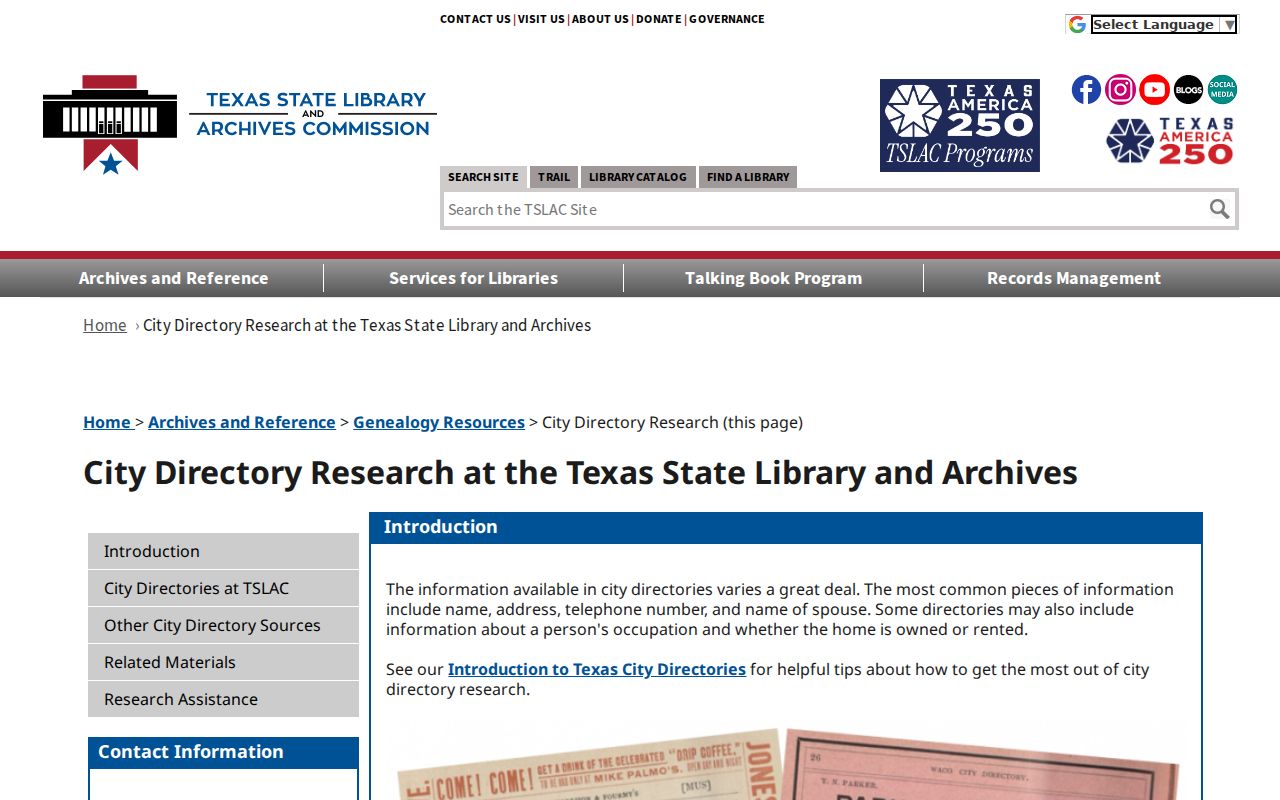
Its guidance supports checking an actual volume’s locality and abbreviations first, rather than assuming a county or regional result is a Hutto directory.
UNT’s Portal to Texas History can be searched by county and time, and the Briscoe Center keeps Texas directory material for many places. The record gap remains real: no inspected source verified a Hutto city-directory publisher, a local telephone-book range, or a naturalization index. Label the gap and ask the holding institution. That is stronger research than borrowing years from a nearby city.
Reading a Hutto City Directory Entry
An entry in this kind of volume is compact. TSLAC describes common fields such as a name, street address, telephone number, spouse, occupation, employer, and occupancy notation. The best inspected example is from the 1940–41 and 1942 Tri-Cities & La Porte directories on the Portal to Texas History. It contains people with the surname Hutto, but it is not a Hutto volume. Use it to learn the layout, then apply that reading method only after a local volume has been confirmed.
| Name | Surname and given name form the entry’s main search point. |
|---|---|
| Spouse or relative | A name in parentheses can identify a family connection. |
| Household notation | The sample includes a compact household-count notation that needs the volume’s own key. |
| Work notation | Occupation abbreviations and an employer may appear in the line. |
| Residence | The marker h, street number, street, and locality abbreviation identify the listed home address. |
| Occupancy marks | Some directory series use occupancy or ownership marks; no Hutto-specific mark was verified. |
- Criss-cross directory
- A street-ordered section that lists addresses rather than names, when a volume includes one.
- Householder index
- A name index organized around the listed household, which may omit other people at the address.
- Abbreviation key
- The printed key that defines a volume’s shorthand; capture it before interpreting any entry.
Hutto Directory Myth Check
The central myth is that a directory-style result proves a complete local household. It does not. A historical book can omit a person, use an old street form, or list only selected adults. A cemetery index records an interment, not a home. A Sanborn sheet records a building and its use in a map year, not the people inside. Hutto’s growth and changing plats make it especially important to keep the source type and date next to every note.
For modern address records, use the Hutto by-street directory after a historic place has been narrowed. The historical-collection approach stays with dated sources and reading methods. A current parcel or mailing record should not be pushed backward in time without a deed, plat, map, directory, census, or other dated bridge.
Hutto Sanborn Map Context
The confirmed 1921 Hutto Sanborn sheet is a practical companion to a historic household search. The one-color-sheet item identifies the Sanborn Map Company, 1921, and the Hutto location. It shows buildings, street names, uses, and fire-risk details. That lets a researcher test whether a historic place was a store, a house, a public building, or open ground before treating a modern address as a direct match.
The Portal to Texas History item preserves the 1921 Hutto companion map as a dated place record.
The map should be paired with a County Clerk deed, a plat, and the nearest census or confirmed directory volume. A Texas Historical Commission survey references maps through 1937, but only the 1921 sheet was directly verified. Treat the later date as an archive lead, not as an online Hutto map.
Hutto Cemetery Directory Endpoints
The Hutto Cemetery grave search adds a local identity checkpoint when a directory trail ends. It accepts first and last name searches, and the visible result layout includes headstone, date of birth, date of death, section, and lot. Cemetery history also identifies the site as formerly Elmwood and notes the earliest marked grave as 1887. Those details help separate people with similar names, but an interment result still does not establish every residence a person had.
The cemetery search is a Hutto historical-directory companion because it supplies fields a directory line may not have.
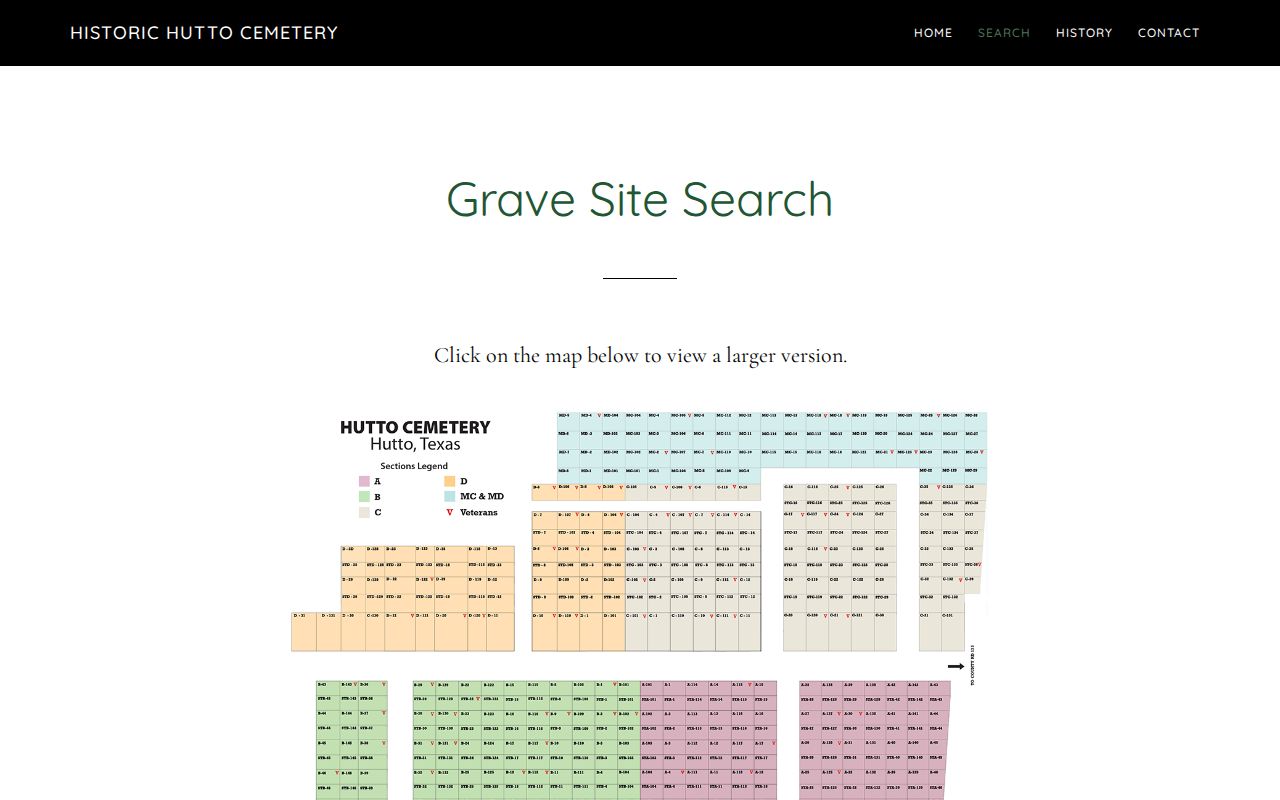
Hutto Genealogical Society material also distinguishes Shilo from Shilo-McCutcheon and notes a 1977 county survey. Keep those cemetery names separate in a research log. Combining them without checking the source can merge distinct places and families.
Tracing Hutto City Directory Families
When a confirmed Hutto volume is found, use it as one dated snapshot in a larger family-history trail. Directories can be annual, while the federal census is decennial and public through 1950 under the National Archives’ 72-year rule. A volume may supply an address and spouse notation; the census adds household relationships, ages, and birthplace information. A deed or plat can stabilize the place when an older street reference differs from a current postal address.
- Record the volume title, publication year, locality, page, and the exact spelling of the name.
- Copy the address, spouse notation, abbreviations, and any occupation or employer field without expanding the shorthand yet.
- Read the volume’s key and check any criss-cross portion for the same address, if one exists.
- Pair the directory year with the nearest 1920, 1930, 1940, or 1950 census snapshot, rather than expecting an exact match.
- Use a deed, cemetery result, obituary, probate item, or marriage index to test whether a disappearance reflects a move, death, omission, or changed name.
Hutto’s railroad-era place names add one more check. Front Street, Austin Avenue, East Street, Farley Street, FM 1660, and county-road descriptions can appear in different decades. Preserve the original wording and legal description in notes. Do not force every historic reference into today’s address format.
Hutto Directory Dates in Context
The Hutto history record explains why a single directory is rarely enough. The town was platted at the Williamson County Courthouse in 1877, additional plats followed in 1884 and the 1890s, and Hutto incorporated in 1911. The history is useful for locating the right kind of record: plats and deeds for land, municipal material after incorporation, and maps or census pages for historic place and household context.
- 1877: James Emory Hutto filed the town plat, originally six blocks and 98 lots.
- 1884 and the 1890s: Additional plats expanded the early town record.
- 1911: Hutto incorporated, adding municipal records to the county trail.
- 1921: The verified Sanborn sheet captures the downtown built environment.
- 1950: The latest public federal census provides the most recent decennial household snapshot.