
Hutto Previous Residents by Era
Past residents of one Hutto address are best traced through records that cover different periods and facts. Begin with the current parcel, then follow recorded land transfers. Add city development material to date a project, maps to test the physical place, and household sources only when their locality and date are confirmed. The County Clerk’s public portal did not expose an online start date during research. That unknown is important: a missing web result does not prove that an earlier transfer or address record never existed.
| Source | Era or coverage | Where held | What it contributes |
|---|---|---|---|
| WCAD appraisal search | Current and selectable tax years; online start not located | WCAD | Parcel, owner, property fields, and legal-description search keys |
| County tax receipts | Current and prior years advertised; exact online start not located | Tax Assessor-Collector | Statement and payment context, not full title history |
| County deed index | Exact online cutoff not located | County Clerk, courthouse, possible FamilySearch books | Recorded transfers, liens, plats, and legal descriptions |
| GovWell permits | Hutto GovWell from July 1, 2024; older system unknown | Hutto Development Services | Applicant-specific project, review, and inspection context |
| Hutto Sanborn sheet | Directly inspected 1921; survey references 1921–1937 | UNT Portal and historical survey | Building, use, and street context rather than a household roster |
| Federal census | Public through 1950 under the 72-year rule | NARA and library databases | Decennial household snapshot |
| Hutto Cemetery | Marked graves include 1887 onward; database is dynamic | Cemetery and genealogical sources | Burial and death clues, section, lot, and headstone |
For a recent question, begin with WCAD and a focused County Clerk record search. For an older address, begin with the legal description and a map before assuming the current street number ever existed. Previous residents research becomes stronger when every step is dated and labeled by record type.
Hutto Previous Residents: Parcel First
Save the current WCAD property or account ID, situs address, legal description, owner, tax year, and any subdivision, block, or lot label before following a name. The situs address identifies the land’s physical location. A mailing address identifies where an owner receives mail and may be elsewhere. The legal description, such as a subdivision, block, lot, tract, survey, or abstract, is the bridge most likely to survive a changed postal address or later subdivision work.
WCAD offers address, property-ID, owner, street, city, ZIP, neighborhood, tax-year, and legal-description filters. The County Tax Assessor-Collector’s statement and receipt portal adds current and prior-year payment context. Neither source alone proves a complete ownership history or identifies every past household. Use the parcel fields to locate the relevant recorded document, then compare the parties and description in that instrument.
Trace Hutto Previous Residents
To trace past owners through the Williamson County deed chain, start with the current owner and legal description from WCAD. Reach the official records entry through the County Clerk search-records page. Find the transfer to the current owner, copy the prior grantor, and use that person and the same legal description as the next search point. A deed chain can demonstrate title. It does not establish that every grantor lived at the address after a transfer.
The Williamson County records-search page directs researchers to the county’s official record channels.
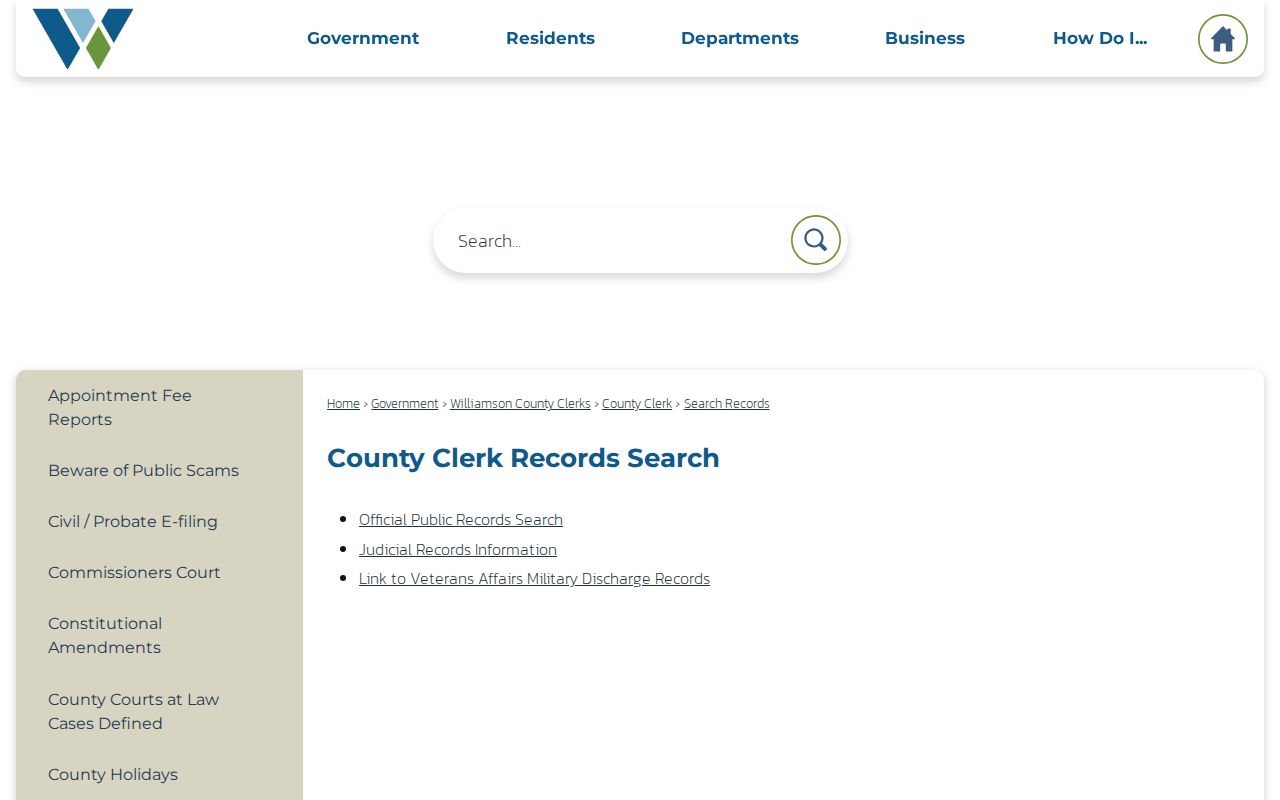
Use the county page as the verified entry point, especially because the linked Tyler portal did not disclose its searchable coverage during research.
- Record the current parcel ID, situs address, and legal description from WCAD.
- Find the deed where the current owner is the grantee, then save the instrument number, date, grantor, grantee, and description shown.
- Use the prior grantor and exact description to locate the next older conveyance. Normalize initials, married names, estates, trustees, and “and spouse” wording.
- Repeat backward, comparing tax or appraisal history when it adds a date check. Do not assume a deed address is the grantor’s next residence.
- If the index does not supply the needed record, use the Recording Division counter, a focused written request, a courthouse visit, or documented archival channels.
- Grantor and grantee
- The grantor transfers an interest in land. The grantee receives that interest.
- Chain of title
- The sequence of recorded transfers used to follow ownership of the same land backward.
- Legal description
- The land identifier in an instrument, such as a lot, block, tract, survey, or abstract. It is more durable than a street address.
The Tyler records URL returned a 403 during inspection, so public result fields, image access, charges, and online coverage were not verified. The County Clerk says staff cannot perform open-ended searches under Attorney General Opinion WW-607. Ask for identified parties, dates, document types, or instrument numbers instead.
Hutto Past Residents: GovWell Tip
An insider tip for Hutto address history: a permit can mark a building event, not a move. GovWell began serving Hutto development and planning applications on July 1, 2024. The system can show an applicant, contractor, project address, plan review, comments, inspections, and status to applicants listed on the project. It does not offer the public a complete address-history browser. A record attached to an address might name a builder, representative, or entity rather than an owner or occupant.
For older work, check the Hutto public archive by address, street, owner, subdivision, ordinance, or permit term, then use the Hutto Public Records Center for missing material. City archives, MyPermitNow references, paper files, and a focused request may all matter for years before GovWell. A permit date can anchor construction, an addition, or an inspection. It does not establish a sale or a household change.
Note: Applicant-only GovWell visibility means that an empty project list is not evidence that an address has no permit history.
Hutto Addresses Before Postal Forms
Address continuity is the hard part of a Hutto house history. James Emory Hutto filed the town plat in 1877, then additional plats followed in 1884 and the 1890s. Early records may use Front Street, Austin Avenue, East Street, Farley Street, FM 1660, a county-road description, a survey name, or a lot and block rather than a modern postal address. The first town plat’s six blocks and 98 lots near the railroad crossing at present Jim Cage Lane provide useful historic vocabulary, not a ready-made conversion key.
No official source inspected verified a Hutto street-renaming or renumbering year. Bridge an old address with an intersection, plat, deed, subdivision, survey or abstract, and county address certification. Keep the original wording in the research notes. A modern street number should be treated as a conclusion only when the map or instrument makes the connection.
Hutto Previous Residents on Sanborn
The confirmed historical map layer is the 1921 Hutto Sanborn sheet, a color map from the Sanborn Map Company supplied through the Briscoe Center and UNT’s Portal to Texas History. It records buildings, uses, street names, and fire-risk details. Use it to ask whether an address area held a house, store, public building, or vacant space in 1921. Then compare that physical context with a deed, newspaper, probate file, or census record.
A Texas Historical Commission survey refers to Hutto Sanborn maps for 1921 through 1937, but only the 1921 item was directly verified. The map is evidence of place and time, not proof of a named household. It becomes most useful when a land description or older street reference makes the location match clear.
Hutto Past Households by Census
Deeds follow ownership. Household sources can add residents when they are local, dated, and read with care. No exact Hutto city-directory or reverse-directory year run was verified in the inspected library and TSLAC catalogs. TSLAC says a typical directory can include a name, street address, phone, spouse, occupation, employer, and owner or household notation. Confirm a Hutto volume with the library, Williamson County Genealogical Society, TSLAC, or Round Rock Public Library before treating a directory entry as local coverage.
- Match the address to a legal description or map first.
- Locate a confirmed local directory or reverse-directory entry for the nearest year available.
- Pair it with the nearest public census, which is available through 1950 under the 72-year rule.
- Compare name spelling, age, relationship, birthplace, and address context before joining the records.
- Use an obituary, probate file, cemetery entry, or later deed to test the end of the trail.
The detailed collection cautions and sample-entry method are available in the Hutto city directories resource. A nearby Tri-Cities and La Porte volume is a reading example, not evidence of a Hutto directory run. Census pages are decennial snapshots, so they should not be used as an annual address file.
Hutto Cemetery Resident Clues
Hutto Cemetery can provide a useful endpoint for a historical resident trail. The historic cemetery was formerly Elmwood; its history names an earliest marked grave from 1887 and describes later association ownership, pauper lots, a Swedish Church lot, fraternal markers, and military markers. The official grave search accepts a first and last name and displays headstone, date of birth, date of death, section, and lot. Those fields can help distinguish similarly named people after a deed or census search.
The Hutto Texas Genealogical Society cemetery guide capture points to Hutto and nearby cemetery research leads.
Compare a burial clue with an obituary, probate record, or known address. A cemetery result can identify death and burial information, but it does not by itself prove the person lived at a particular Hutto property.
Hutto Previous Residents Privacy
Older property and family-history research still has limits. Utility customer lists are not a public household directory, and motor-vehicle address data is restricted. A person can use the Williamson County voter opt-out form to remove a result from the county elections website and the Texas SOS lookup, though the form does not remove information that remains public under the Texas Public Information Act. An address-confidentiality program is a separate protection, not a deletion of a recorded instrument.
The County Clerk’s official search-records page is also the proper entry point when reviewing a recorded document. If a record contains a sensitive identifier or an index error, contact the custodian for the available correction or redaction process rather than copying the document elsewhere.
Lawful use. Use previous-resident research for house history, family history, estate questions, or personal curiosity. Do not use a historical trail to stalk, harass, or track a living person, and do not republish protected address details.